John T. Wilson Homestead

The John T. Wilson Homestead in Tranquility, Adams County, Ohio, stands as a powerful testament to the Underground Railroad network that operated in Scott Township from the 1830s through the 1850s. At the heart of this coordinated movement was John T. Wilson—a merchant, landowner, Union officer, and later U.S. Congressman—whose home served as a vital station on what Calvin Rankin later described as “Ripley’s Eastern Route.”
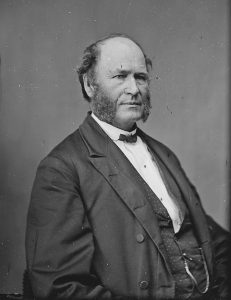
Portrait of John T. Wilson by Mathew Brady (c. 1865).

Wilson’s antislavery convictions were shaped by his upbringing in the Flat Run community of neighboring Highland County, where he was raised in an antislavery Methodist society. In 1832, Wilson settled in what became known as Tranquility and began working as a merchant, initially operating his store out of the Smiley house, where he also boarded. He later moved in with the family of John and Nicassa McCreight while constructing his original log storehouse and residence. During this period, Wilson met Hadassah Dryden (1819–1849), the younger sister of Nicassa Dryden McCreight. Hadassah and Nicassa were daughters of William Dryden, a native of Rockbridge County, Virginia, who had settled in Adams County and married into the pioneering McIntire family of Scott Township. John T. Wilson and Hadassah Dryden married in 1841 and welcomed their only child, Spencer, the following year.

In 1844, Wilson completed construction of his brick home, store, and post office—establishing both a commercial hub and a covert refuge for freedom seekers. The Tranquility Post Office, housed in Wilson’s storeroom, was operated by his brother-in-law, John McCreight, a devout Covenanter and committed abolitionist. The McCreights were active conductors, and their son, Alexander McCreight, was later identified by local historian Nelson Evans as an Underground Railroad agent. Alexander went on to serve as an elder in the Associate Reformed Presbyterian Church of Tranquility, a congregation built up by Rev. William Baldridge of nearby Cherry Fork that explicitly barred communion with slaveholders.

Though raised Methodist, Wilson attended Tranquility Presbyterian church and became part of the extended Presbyterian network of abolitionists and conductors. The Ralston family, who lived nearby on “The Ridge,” also played a significant role in the region’s antislavery movement.

Routes into and out of Tranquility were strategically organized. Conductors such as James Wiley Torrence—who worked closely with Wilson—and John W. Hudson, a free Black man from the Gist Settlement in Brown County, helped move freedom seekers into Tranquility along two primary corridors: one through the Rothrock family in Cherry Fork, and another via Sardinia into Mt. Leigh. Once in Tranquility, the Wilson Homestead served as a key station.

From there, freedom seekers moved North to Flat Run in Highland County, where religious and familial ties offered safe haven; and East to Locust Grove, where the Wickerham family—Presbyterians whose home is now listed on the National Park Service’s Network to Freedom—provided shelter. From Locust Grove, they continued along the old Zane’s Trace to Sinking Spring, Highland County, another known hub.

This coordinated network of resistance to slavery was sustained by faith, kinship, and shared moral resolve. As conductor James Wiley Torrence told historian Wilbur H. Siebert:

“John T. Wilson was a great hand to operate [on the Underground Railroad] — a good deal like Solomon built his temple—what he didn’t do himself he had done [by others].”

Torrence’s words capture Wilson’s role not simply as a participant, but as an organizer, funder, and facilitator whose leadership gave the Scott Township network its reach and strength.

Wilson’s commitment to freedom and justice extended beyond the antebellum years. During the Civil War, he helped recruit and personally outfit the 70th Ohio Volunteer Infantry, serving as one of its officers until his health failed. Wilson would serve as a Radical Republican in Congress and funded the creation of the Adams County Children’s Home, reflecting a lifelong dedication to public service, equality, and care for the vulnerable.

Asbury Parker Memorial in ARMCO Park

Boyd County, Kentucky

Asbury Parker Memorial in ARMCO Park The Asbury Parker Memorial at ARMCO Park commemorates the 1857 escape of Asbury Parker (c.1830–1903) from slavery at nearby Clinton Furnace. Located approximately one […]

Learn More

Portsmouth Steamboat Landing

Ohio, Scioto County

Portsmouth, Ohio’s Steamboat Landing: A Gateway to Freedom With the opening of the Ohio and Erie Canal in the early 1830s, Portsmouth, Ohio’s Steamboat Landing emerged as an important Underground […]

Learn More

Asbury Parker Passage to Freedom

Cabell County, West Virginia

Crossing the River Jordan Asbury Parker’s life traces a remarkable journey from enslavement in Cabell County, Virginia (now West Virginia), through a daring 1857 escape along the Ohio River, to […]

Learn More

James M. Ashley Residence

Ohio, Scioto County

James M. Ashley at Huston Corner Abolitionist James M. Ashley lived here with the Huston family from 1848 to 1851 while studying law and helping publish newspapers. In 1851, Ashley […]

Learn More

Piketon 59 at Catlettsburg’s Riverfront

Boyd County, Kentucky

During the Civil War, the Catlettsburg Riverfront became the site of one of the largest group escapes of freedom seekers in Kentucky history – the 1862 flight of the Piketon […]

Learn More

Mt. Pisgah Baptist Church

Lawrence County, Ohio

Lewis Brooks and Mt. Pisgah Baptist Church  In the 1850s, Lewis Brooks, a free Black farmer living near Quaker Bottom (modern Proctorville, Ohio), operated one of the most important Underground […]

Learn More

The Johnston House and Post Office

Lawrence County, Ohio

The Johnston House and Post Office: Burlington, Ohio’s Network to Freedom Freedom seekers crossing the Ohio River into Burlington, Ohio, entered a community where Black residents and white allies worked […]

Learn More

Payne’s Corner

Gallia County, Ohio

Payne’s Corner Store and Post Office, located in the village of Porter in Gallia County, Ohio, served in the mid-nineteenth century as a key station in a network of abolitionists […]

Learn More

John P. Parker House

Brown County, Ohio

Located along the Ohio River in Ripley, Ohio, the John P. Parker House stands as a powerful testament to resilience, courage, and the enduring fight for freedom. Born enslaved in […]

Learn More

Red Oak Presbyterian Church and Cemetery

Brown County, Ohio

Red Oak Presbyterian Church and Cemetery The Red Oak Presbyterian Church and Cemetery in Brown County, Ohio, hold a prominent place in the history of the Underground Railroad and the […]

Learn More

Joe Logan and the West Union Network to Freedom

Adams County, Ohio

Joe Logan and the West Union Network to Freedom In the summer of 1822, Joseph “Joe” Logan, a determined freedom seeker born into slavery in North Carolina around 1797, made […]

Learn More

Wickerham Inn

Adams County, Ohio

Wickerham Inn: Along the Road to Freedom Built between 1801 and 1805 by Revolutionary War veteran Peter Wickerham (1756-1841), the Wickerham Inn was a stagecoach stop and tavern along Zane’s […]

Learn More

Greenup County Courthouse

Greenup County, Kentucky

Greenup Revolt and Murder Trial (1829-1830): The Greenup County Court House Square serves as a powerful reminder of how the pursuit of freedom, and the rule of law became deeply […]

Learn More

Union Baptist Church

Lawrence County, Ohio

A Busy Junction Worshippers at Union Baptist Church were active participants in the Underground Railroad. Founded in 1819, the congregation is the longest continuously operating African American church in Ohio, […]

Learn More

Macedonia Missionary Baptist Church

Lawrence County, Ohio

Macedonia Missionary Baptist Church, first organized between 1811 and 1813 in Burlington, Ohio, is recognized as the oldest Black congregation in the state. Located on Macedonia Hill—two miles from Burlington […]

Learn More

Bennett’s Mill Covered Bridge

Greenup County, Kentucky

Bennett’s Mill Covered Bridge in Greenup County, Kentucky marks the former location of the Globe Furnace and Ironworks. Here, in November 1837, Isaac Downey, a forty-year-old man, escaped his enslavement, […]

Learn More

The Greenup Slave Revolt

Greenup County, Kentucky

On August 14, 1829, in a remarkable act of defiance, a coffle of fifty-five enslaved men, women, and children, forcibly marched from Somerset, Maryland to the slave markets in Natchez, […]

Learn More

Bethel AME Church of Gallipolis

Gallia County, Ohio

Just three miles from the mouth of the Kanawha River in what is now West Virginia, the John Gee Black Historical Center in Gallipolis, Ohio, preserves the legacy of Bethel […]

Learn More

Gov. Thomas Kirker Homestead

Adams County, Ohio

Built in 1805 along Zane’s Trace—the historic “Gateway to the West”—the Gov. Thomas Kirker Homestead in Adams County, Ohio, stands as one of the earliest verified Underground Railroad sites in […]

Learn More

Escape From Green Bottom Plantation

Cabell County, West Virginia

In the early 1800s, the plantation known as Green Bottom—located along the Ohio River in Cabell County, West Virginia—was home to dozens of enslaved African Americans. Then part of Virginia, […]

Learn More

James Major Monroe’s Escape from Guyandotte

Cabell County, West Virginia

In August 1836, after discovering he was to be sold to the “lower markets,” thirty-year-old James Major Monroe escaped from his Guyandotte, Virginia-based enslaver, Victor LeTulle. Leaving behind his wife, […]

Learn More

Pleasant Green Baptist Church

Ohio, Scioto County

Founded in 1864 by formerly enslaved individuals, conductors, and freedom seekers, Pleasant Green Baptist Church (PGBC) is the oldest continuous Black Baptist congregation in Portsmouth, Ohio. Its early leaders and […]

Learn More

Allen Chapel AME Church

Ohio, Scioto County

Established in 1837, Allen Chapel African Methodist Episcopal (AME) Church is Portsmouth, Ohio’s oldest Black religious society and one of the oldest AME congregations in Appalachia Ohio. Founded in the […]

Learn More

Quinn Chapel AME Church

Lawrence County, Ohio

A Story of Faith and Freedom Founded in December 1856 in the Ironton home of Henry and Rebecca Harvey, the African Methodist Episcopal Church of Ironton—now Quinn Chapel—quickly became a […]

Learn More

Campbell House

Lawrence County, Ohio

The Campbell House: A Station of Hope in Ironton’s Underground Railroad Network Built in 1851, the Campbell House in Ironton, Ohio, served as a station on the Underground Railroad and […]

Learn More

John Rankin House Historic Site

Brown County, Ohio

Liberty Hill and the Road to Freedom Built in 1828, the Rankin House, home of Rev. John and Jean Lowry Rankin and their thirteen children, became one of the most […]

Learn More